


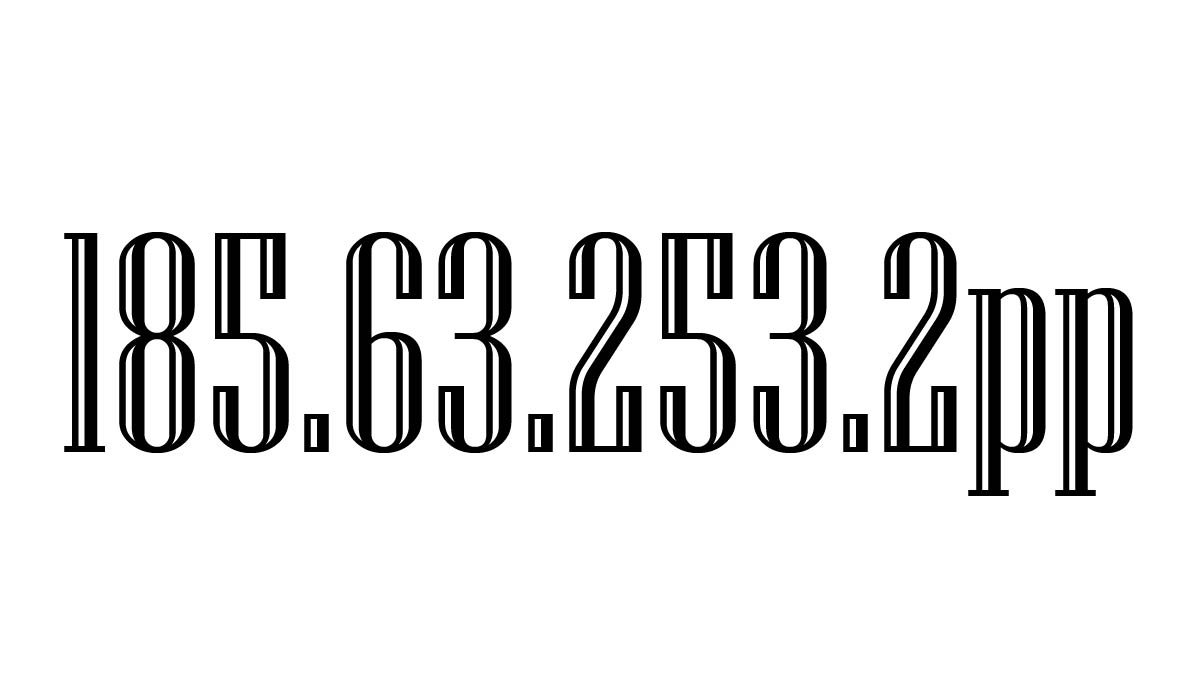
What Is 185.63.253.2pp?
The term 185.63.253.2pp might seem like just another string of numbers and letters, but it holds particular significance in the digital realm. At first glance, it resembles a typical IPv4 address, which is used to identify devices across the internet. The first part—185.63.253.2—is a valid IP address used by hosting or networking providers. However, the “pp” suffix at the end immediately raises questions.
In traditional networking protocols, an IP address does not include alphabetic characters, so this variation could be non-standard, misleading, or deliberately crafted for a specific purpose. It may be used as a label in phishing attacks, a spoofed identity in server logs, or even as part of a trick to confuse users and bypass basic security filters. This article explores the full context, uses, potential dangers, and what to do if you see 185.63.253.2pp on your screen or in your analytics dashboard.
Understanding the Basics of IP Addresses
An IP address (Internet Protocol address) is like a digital street address for every device connected to a network. It allows communication between computers, servers, and smartphones across the internet or local networks. There are two types: IPv4, the older format, and IPv6, which was introduced to handle the growing number of connected devices. IPv4 addresses, like 185.63.253.2, consist of four sets of numbers ranging from 0 to 255, separated by dots.
Each of these numbers (known as “octets”) plays a part in identifying both the network and the specific device on that network. IPv6 is longer and more complex, designed to support billions of devices. IP addresses help route data where it needs to go, ensuring that everything from emails to web searches reaches the correct destination. They are fundamental to how the modern internet works, and their accuracy and integrity are essential for everything from secure communication to user tracking.
The Structure of 185.63.253.2 and the Odd “pp” Suffix
Let’s break down 185.63.253.2pp into parts. The first portion—185.63.253.2—follows the classic IPv4 structure. This address is valid and registered to HostPalace Datacenters Ltd in Amsterdam, Netherlands. It’s likely used in web hosting, virtual servers, or proxy services. However, the added suffix “pp” is not part of any standard IP protocol. IP addresses do not include letters, so “pp” makes the entire string invalid from a networking perspective.
This addition might be the result of a manual labeling system, such as “private proxy,” or it could be a mistake in a log or system configuration. In other cases, it may be a deliberate trick—used in referral spam, fake links, or phishing campaigns to mimic a valid IP address while misleading users or systems. Because it breaks conventional formatting rules, 185.63.253.2pp becomes suspicious and should be treated with caution.
Who Owns 185.63.253.2?
When examining strange or unknown IPs, a WHOIS lookup is the go-to tool. A WHOIS search of 185.63.253.2 reveals that the address is assigned to HostPalace Datacenters Ltd, a hosting provider operating out of Amsterdam, Netherlands. This company offers a range of digital infrastructure services, including VPS hosting, dedicated servers, and cloud storage. The IP itself could be tied to multiple websites, VPN endpoints, or private proxy services. WHOIS data helps administrators trace the ownership and location of IPs to identify whether a source is legitimate or potentially harmful. It’s worth noting, however, that WHOIS only provides information on the core IP—not any modifications or suffixes like “pp,” which are likely artificial. If you see “185.63.253.2pp” in your logs, strip the suffix and check the base IP first.
Common Uses of 185.63.253.2 (Without the “pp”)
IP addresses like 185.63.253.2 are frequently used in web hosting environments. Hosting companies allocate such addresses to store websites and applications, acting as the digital address that browsers contact when users enter a domain name. These IPs are also often used by VPN providers and proxy services to reroute user traffic, mask original IPs, and maintain anonymity. Additionally, system administrators might assign such IPs for internal testing, network diagnostics, or sandbox environments to simulate real-world traffic scenarios. In all these contexts, the IP is completely valid and operational. The issue only arises when an unexpected suffix like “pp” is attached, which changes the context entirely and could signal tampering or misconfiguration.
How 185.63.253.2pp Can Appear in the Wild
Even though 185.63.253.2pp is not a valid address format, it can still show up in unusual places—like web analytics logs, firewall alerts, or URL links. In many cases, this happens because of referral spam, where bots fake traffic sources to promote shady domains. It can also occur when attackers craft malicious links to mimic a real IP-based download source, like http://185.63.253.2pp/file.exe, tricking users into thinking it’s legitimate. In security logs, malformed IPs may be flagged during botnet scans, failed login attempts, or automated intrusion tests. The appearance of “pp” suggests an attempt to either disguise traffic or bypass detection systems that only check for standard IP formats. This technique may also be used to throw off analytics software, creating confusion in traffic reports and reducing the visibility of real threats.
Cybersecurity Risks of 185.63.253.2pp
From a security perspective, any non-standard IP string like 185.63.253.2pp should be viewed with suspicion. Cybercriminals often exploit such variations in format to bypass basic filters, evade detection, or spoof legitimate sources. For example, poorly configured systems may fail to flag “185.63.253.2pp” because it doesn’t match known IP patterns, allowing malicious content to slip through. Such entries may also be used to launch phishing attacks, distribute malware, or act as part of command-and-control traffic for a botnet. In many cases, the goal is to confuse both the system and the user into accepting the traffic as legitimate. This underscores the importance of input validation, firewall rule accuracy, and awareness of obfuscation tactics used in the wild.
How to Investigate 185.63.253.2pp Safely
To analyze 185.63.253.2pp, start by removing the “pp” suffix and focusing on the base IP address. Use tools like IPinfo.io, AbuseIPDB, or WHOIS to find out ownership details, recent abuse reports, and server associations. Then, perform a reverse DNS lookup to see if the IP is tied to any domains. If you suspect it’s involved in malicious activity, run it through VirusTotal or similar threat intelligence platforms. If it appears in security logs, correlate it with other activity—check user-agent strings, ports used, timestamps, and geo-location to assess legitimacy. Never click on links containing malformed IPs and always investigate anomalies using secure, isolated environments or sandboxes to prevent accidental infections.
What to Do If You See 185.63.253.2pp in Your Logs
If 185.63.253.2pp appears in your system or analytics logs, take it seriously. First, validate whether it’s a formatting issue or an actual attempt to inject misleading data. Next, review any accompanying data—timestamps, traffic volume, origin headers, and other IPs involved. Update your intrusion detection systems (IDS) and firewall rules to block malformed entries. You can use regular expressions (regex) to match and exclude suspicious patterns like trailing letters in IP fields. Consider isolating any internal system that interacted with the string for further inspection. Most importantly, treat this as a potential signal of deeper reconnaissance or scanning activity, and monitor closely for follow-up actions.
Best Practices for IT Teams and End Users
For IT administrators, preventing threats from strings like 185.63.253.2pp begins with enforcing strict input validation rules across all applications and systems. Ensure your logging tools and analytics platforms don’t accept malformed IP formats. Integrate threat intelligence feeds to proactively block known dangerous IPs. For end users, awareness is your best defense. Don’t click links that look strange or contain unexpected characters. If a site or download appears tied to an IP like 185.63.253.2pp, avoid interaction entirely. Always use updated antivirus software and secure DNS services to add extra layers of protection. Whether you’re part of a business or browsing at home, small precautions can stop big threats.
How 185.63.253.2pp Compares to Other Threat Patterns
The trick used in 185.63.253.2pp is not unique. Cybercriminals often rely on visual mimicry to deceive users. For example, URLs like 192.168.1.1zz or 127.0.0.1aa Looks almost right, but they’re crafted to be misleading or to confuse security tools. These tricks are commonly used in phishing attacks, rogue browser extensions, or malware distribution campaigns. Even tech-savvy users can be fooled when malicious actors replicate the look of trustworthy links. That’s why recognizing patterns and being cautious of any deviation from standard formats is key to preventing compromise.
Conclusion
In summary, 185.63.253.2pp serves as an important reminder of the challenges in maintaining digital security. While 185.63.253.2 is a real IP address used by a legitimate hosting provider, the “pp” suffix immediately renders the full string invalid under standard networking rules. Whether it was added as a typo, internal label, or part of a deliberate obfuscation attempt, its presence in any context should raise a red flag. Understanding these anomalies helps individuals and organizations stay ahead of threats, protect their systems, and avoid falling victim to clever manipulation. In today’s ever-connected world, being informed is one of the strongest defenses you have. Stay skeptical, stay secure, and always investigate what doesn’t look quite right.
FAQs About 185.63.253.2pp
For More Information, Visit Hiphermagazine
