


Introduction
Fascism didn’t disappear when World War II ended; it evolved, changed names, and found new ways to creep back into political life. The term “fascisterne”, which is Danish for “the fascists,” refers not only to the historical followers of fascist regimes like Mussolini’s Italy and Hitler’s Germany but also to the ideological movements that continue to echo their values in subtle and dangerous ways today. In our increasingly polarized world, the lessons of fascisterne have never been more urgent.
Nationalism, authoritarianism, and hate-based politics are resurfacing through new mediums such as social media, fringe political parties, and populist rhetoric. Understanding what fascisterne were, how they rose to power, what they believed, and the devastating consequences of their rule is essential for building an informed, resilient society that can stand against the spread of dangerous ideologies.
This article takes a deep dive into the origins, beliefs, historical significance, media influence, modern manifestations, and the ongoing relevance of fascisterne, giving you everything you need to understand one of the most alarming political phenomena of the last century—and why it still matters today.
What Does “Fascisterne” Mean?
The word “fascisterne” directly translates from Danish to “the fascists” in English. While it may seem like a simple descriptor, the term carries heavy emotional and historical weight, especially in European contexts. Its root comes from the Italian word “fascio”, meaning “bundle” or “group,” symbolizing unity and strength through collectivism. In Italian political history, this term was used by Benito Mussolini to name his party Fasci Italiani di Combattimento, which later became the National Fascist Party.
The Danish version, “fascisterne,” became widely used during and after World War II to describe both foreign occupiers and domestic collaborators. Over time, it evolved into a term not only associated with historical regimes but also with ideologies and individuals who support authoritarian, ultra-nationalist policies. It is frequently invoked in political discourse, education, and anti-extremism efforts across Scandinavia and Europe. The emotional charge of the term lies in its association with betrayal, oppression, and a dangerous vision of power that dismisses human rights and civil liberties.
Historical Origins of Fascisterne
To fully grasp the meaning of fascisterne, we must travel back to post-World War I Europe—a continent reeling from destruction, economic collapse, and social upheaval. In this environment of fear, humiliation, and instability, fascism offered a compelling but deadly promise: national rebirth, strong leadership, and the restoration of order. Italy was the first breeding ground for this ideology. In 1919, Benito Mussolini founded the fascist movement by appealing to war veterans, the middle class, and nationalists who felt betrayed by the Treaty of Versailles.
His brand of fascism rejected democracy, glorified violence, and demanded absolute loyalty to the state. Soon after, Adolf Hitler in Germany adopted and twisted these ideas into something even darker—Nazism—which added the element of racial supremacy and resulted in one of the most horrific genocides in history. While Mussolini’s fascism focused on nationalism and anti-communism, Hitler’s added an obsession with Aryan purity and antisemitism, transforming fascisterne into both a political and racial threat.
The Spread of Fascist Ideologies Across Europe
Once Mussolini and Hitler showed the world how fascist ideologies could seize power and maintain control, similar movements began to sprout in other countries. In Spain, Francisco Franco led a military uprising that resulted in a long-lasting dictatorship starting in 1939. Franco’s regime shared many fascist characteristics—ultranationalism, anti-communism, censorship—but didn’t completely adopt the fascist label. In Eastern Europe, groups like the Iron Guard in Romania and the Arrow Cross Party in Hungary displayed the same hatred, violence, and anti-democratic fervor as their Western counterparts.
Portugal’s Estado Novo under Salazar also exhibited fascist tendencies, with its authoritarian structure and rejection of pluralism. In Denmark, although fascism never fully took control, there were pro-Nazi sympathizers such as the DNSAP (National Socialist Workers’ Party of Denmark). During the Nazi occupation from 1940 to 1945, Danish collaborators who supported the German regime were often labeled as fascisterne. The resistance movement fought not only the Nazis but also these local sympathizers, forever associating the term “fascisterne” with treachery and oppression in Danish history.
Core Beliefs and Characteristics of Fascisterne
The ideology behind fascisterne is a chilling combination of several radical principles. First and foremost is extreme nationalism, where the nation is placed above all else. This often leads to xenophobia, racism, and the belief that one’s cultural or racial group is superior. Authoritarianism is another core pillar, with power centralized around a single leader portrayed as a savior or god-like figure. Fascist leaders like Mussolini and Hitler were not just political figures—they were symbols of absolute loyalty and identity.
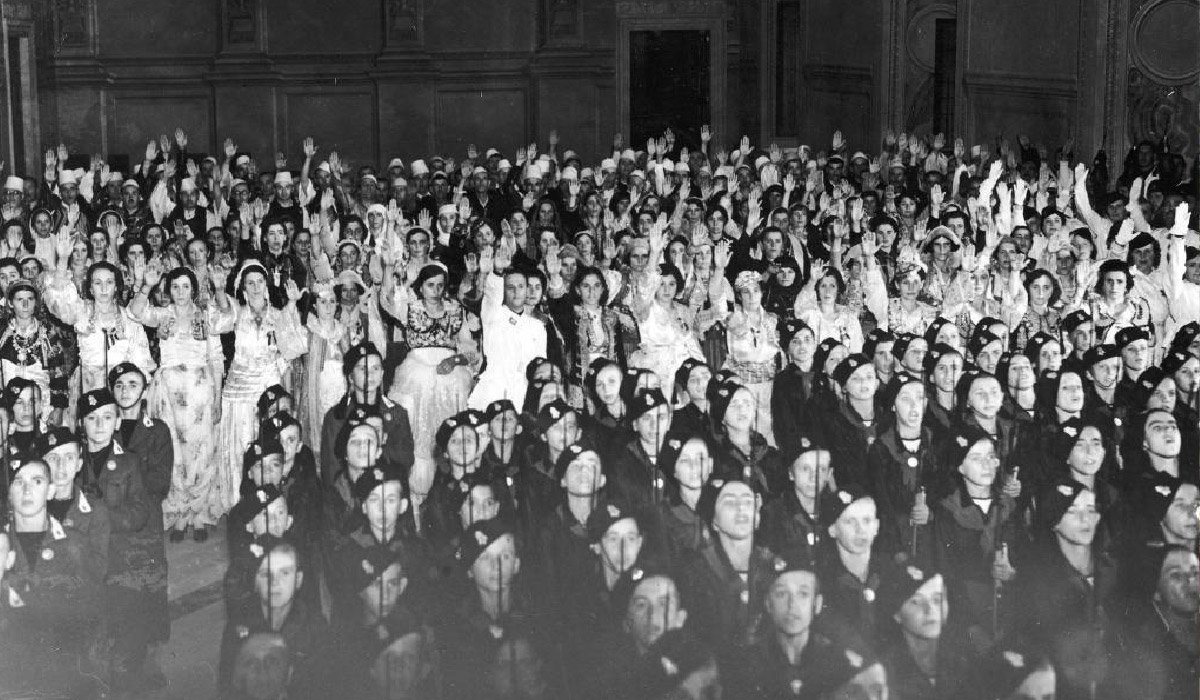
Militarism and glorification of violence are also central to fascisterne. War is seen not as a last resort but as a noble pursuit to cleanse and unify the nation. This obsession with strength leads to youth indoctrination, public parades, and military-style discipline across society. Another hallmark is the suppression of dissent. Fascist regimes control the media, criminalize opposition, and eliminate freedom of speech. Any challenge to the ruling ideology is met with punishment, fear, or disappearance. In short, fascisterne thrive in environments where critical thought is discouraged, and conformity is enforced.
How Fascisterne Maintained Power
Fascisterne were not just ideologues—they were master manipulators who used various tools to consolidate and maintain power. One of the most powerful was propaganda, which was used to manipulate public opinion and create a reality where the leader was infallible and enemies were everywhere. Nazi Germany’s Joseph Goebbels turned propaganda into a political weapon, using films, newspapers, and even schoolbooks to indoctrinate citizens from a young age. Symbols like the swastika and slogans such as “Ein Volk, ein Reich, ein Führer” (One People, One Empire, One Leader) became psychological tools of mass control.
In addition to controlling the narrative, fascisterne relied on scapegoating and fear-mongering. Jews, immigrants, communists, and LGBTQ+ individuals were portrayed as existential threats to national purity. Fear kept citizens compliant and distracted from economic or governmental failures. Legal manipulation, such as rewriting constitutions and staging show trials, allowed fascist regimes to justify their rule under the guise of legality. This combination of media control, fear, violence, and legal domination created a near-totalitarian grip over society.
Consequences of Fascisterne Rule
The impact of fascisterne rule was catastrophic on a global scale. Most infamously, it led to World War II and the Holocaust, where over six million Jews and millions of others—Roma people, disabled individuals, political dissidents—were murdered. Human rights abuses under fascist regimes were systemic, brutal, and ideologically justified. But the damage wasn’t only physical—it was cultural and psychological. In fascist states, literature, art, and education were censored and distorted to serve the ruling ideology.
Economic systems were twisted into tools of war, prioritizing autarky and military production over social welfare. Even after these regimes collapsed, the trauma persisted. Societies were left fragmented, trust in institutions was broken, and survivors carried intergenerational pain. The aftermath also led to the creation of international human rights frameworks like the United Nations, Geneva Conventions, and Nuremberg Trials—all responses to the horrors caused by fascisterne.
Media’s Role in Promoting or Resisting Fascisterne
Media has always played a pivotal role in either promoting or resisting fascisterne. In the 1930s and 40s, newspapers, radio broadcasts, and state-controlled films were used by fascist regimes to normalize their ideologies and erase dissent. Today, social media has become a new battlefield. Algorithm-driven echo chambers allow modern versions of fascisterne to spread hate, misinformation, and conspiracy theories at alarming speed.
Far-right movements now rebrand fascism as “cultural pride” or “traditionalism,” hiding their authoritarian intentions behind patriotism. However, the media also serves as a vital line of defense. Independent journalism, historical documentaries, survivor testimonies, and fact-checking initiatives play a key role in preserving truth and fighting revisionist narratives. Maintaining media integrity and promoting critical thinking are essential in preventing the next rise of fascisterne.
Modern-Day Echoes of Fascisterne
Although the original fascist regimes were defeated in the 1940s, fascisterne has never entirely vanished. Across Europe, America, and parts of Asia, we are seeing a resurgence of far-right populism that uses similar tactics: demonizing immigrants, attacking the press, undermining democratic institutions, and glorifying authoritarian leaders.
These modern-day movements may not call themselves fascist, but they follow the same blueprint. Leaders dismiss international laws, manipulate elections, and pit citizens against each other. The language may have changed, but the goals—power, purity, and control—remain strikingly familiar. Recognizing the signs early and responding with civic action, education, and legal safeguards is crucial to stopping the modern evolution of fascisterne before it can once again take hold.
Final Thoughts
The term fascisterne is not just a historical label—it’s a warning. It reminds us of what happens when fear replaces fact, when loyalty is valued more than truth, and when power is allowed to go unchecked. Understanding fascisterne helps us defend democracy, diversity, and human rights in an age where these principles are under threat. We must continue to teach this history, support independent media, and stand up against rising authoritarianism—because fascism does not announce itself at the door; it often sneaks in quietly, disguised as patriotism or tradition. By remembering the past, we strengthen our ability to shape a more just and inclusive future.
FAQs About Fascisterne
What does the word “fascisterne” mean?
“Fascisterne” is a Danish word that means “the fascists” in English. It refers to people or groups who support fascist ideologies, which include authoritarian rule, extreme nationalism, and the suppression of dissent and freedom.
Where did fascisterne first appear in history?
Fascisterne first appeared in Italy after World War I, when Benito Mussolini founded the fascist movement in 1919. The ideology later spread to Germany under Adolf Hitler, leading to Nazism, and then influenced other countries across Europe.
What are the main beliefs of fascisterne?
Fascisterne believe in strong central power, extreme nationalism, and military strength. They usually reject democracy, promote obedience to one leader, and use propaganda to control society. They often blame minorities for problems in the country.
Are there modern versions of fascisterne today?
Yes, modern versions of fascisterne exist in some far-right political movements. These groups may not use the same name, but they share similar ideas like xenophobia, anti-democratic attitudes, and calls for strong, authoritarian leadership.
Why is it important to study fascisterne today?
Studying fascisterne helps us understand the dangers of hate, propaganda, and dictatorship. By learning from the past, we can protect democracy, human rights, and freedom from being lost to similar ideologies in the future.
Read Also: Kotora Melnkalne: The Ultimate Hidden Gem of Europe
Visit For More Hiphermagazine
